Blog
Product updates, build notes, and practical tutorials pulled from the kinds of questions makers ask every day.
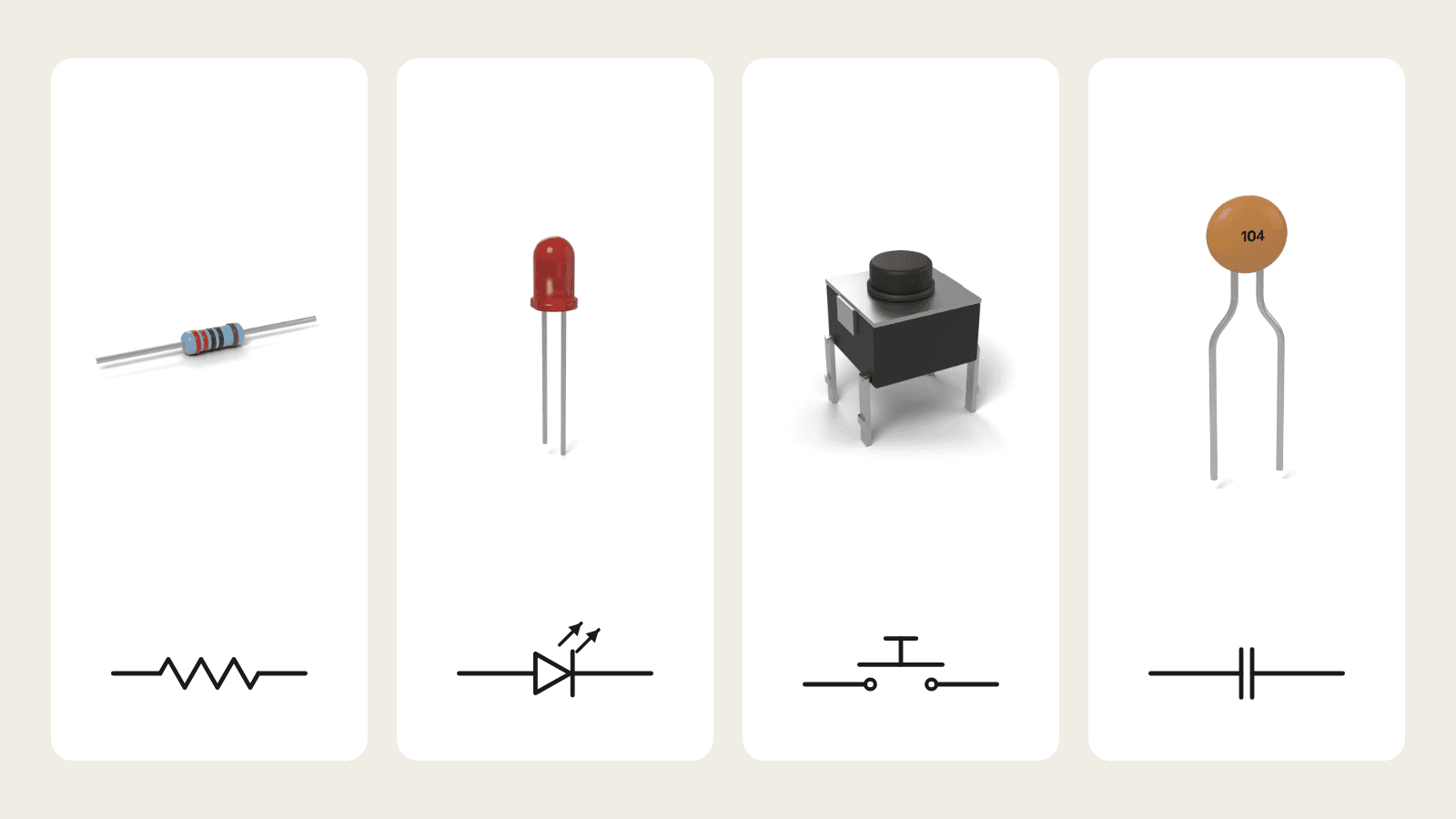
Electronic symbols chart: 18 common components with pictures
The circuit symbol for 18 common parts, each next to a picture of the part, with what it does and which way around it goes. Plus a chart to save.
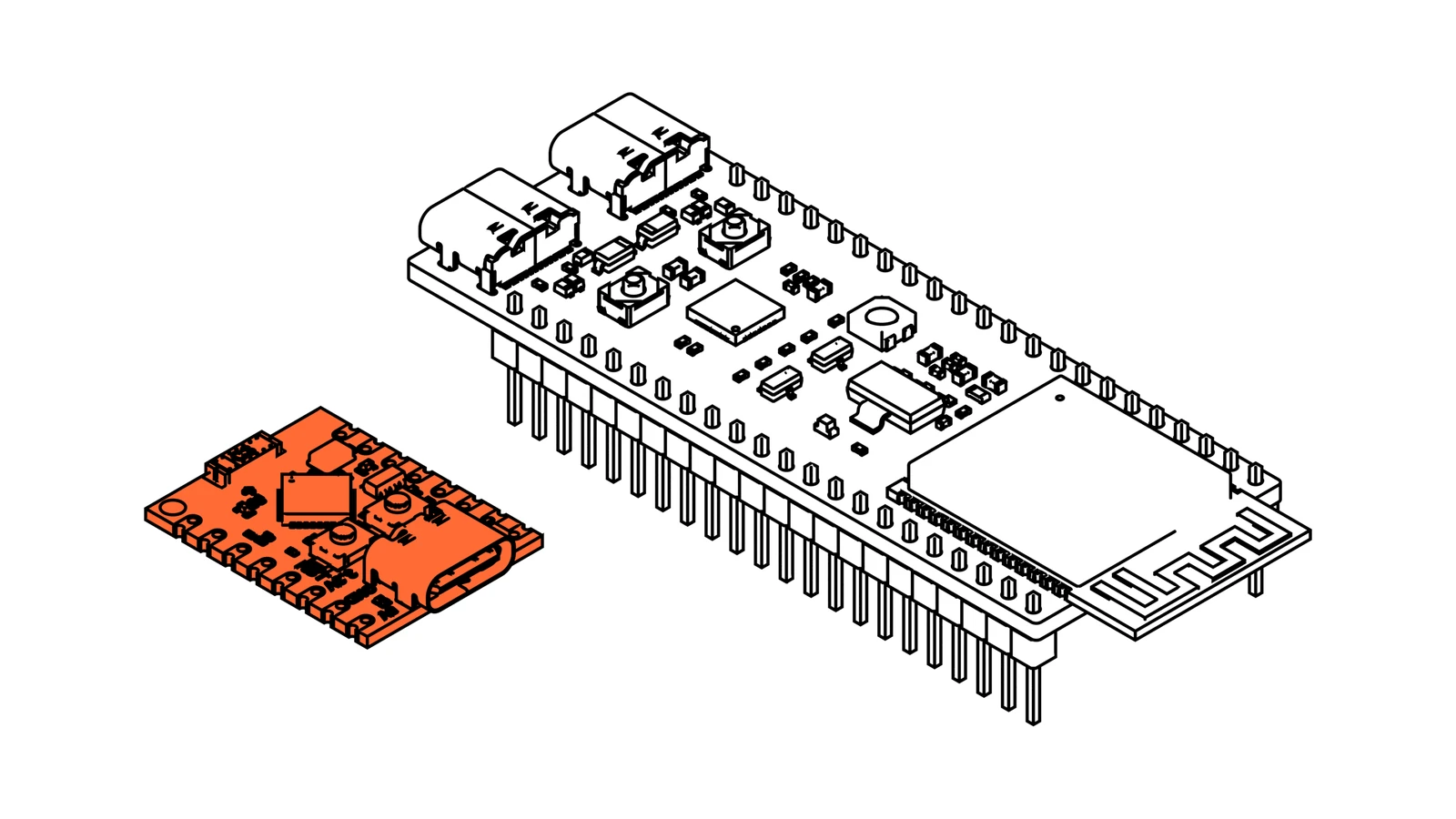
ESP32-C3 vs S3 vs C6: specs side by side and which to pick
The S3 has two fast cores, a camera port and native USB. The C3 is the tiny low-power one. The C6 speaks Wi-Fi 6, Zigbee and Thread. A side-by-side table from Espressif's datasheets, and which to pick for your build.
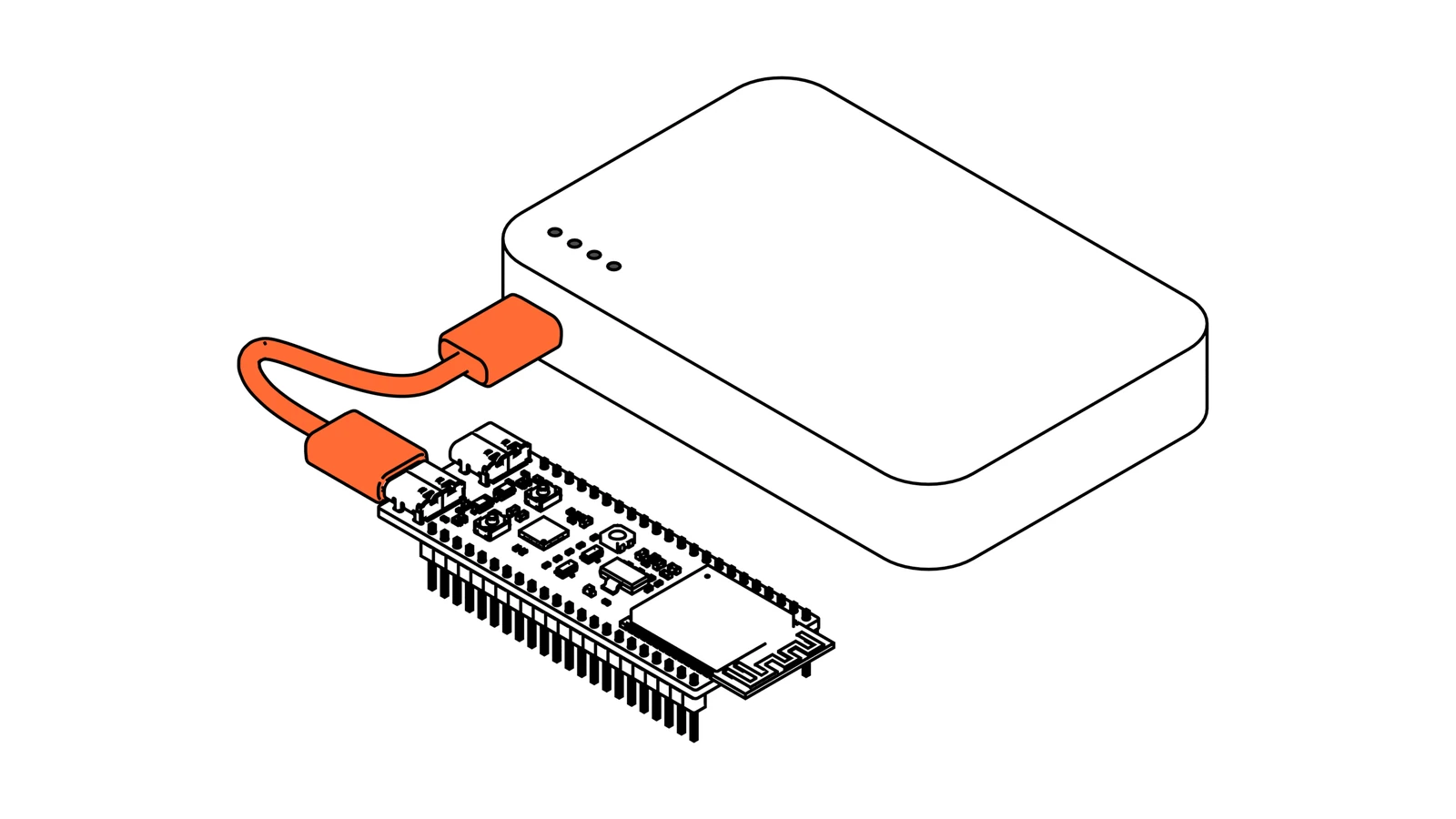
How to power an ESP32: USB, the 5V pin, the 3V3 pin and batteries
There are four ways to get power into an ESP32, and each one goes through the board differently. Here is the path each one takes, the numbers from the datasheets and how to make a battery last for months.
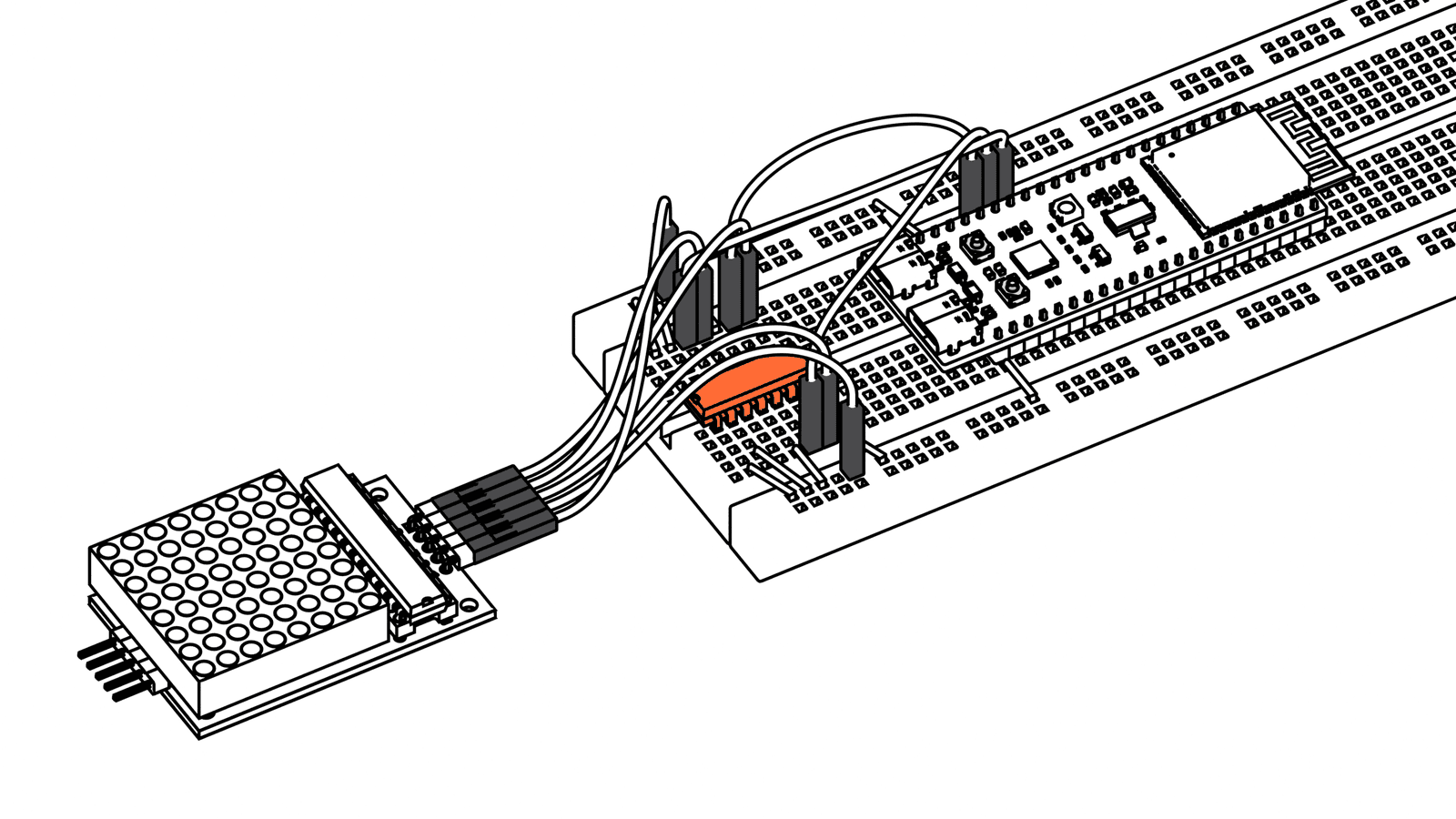
Logic level shifter: when an ESP32 needs one and how to wire it
Your ESP32 speaks 3.3V and some parts speak 5V. Here is how to tell when that matters, and the three ways to connect them safely: a divider, a buffer chip or a MOSFET shifter.
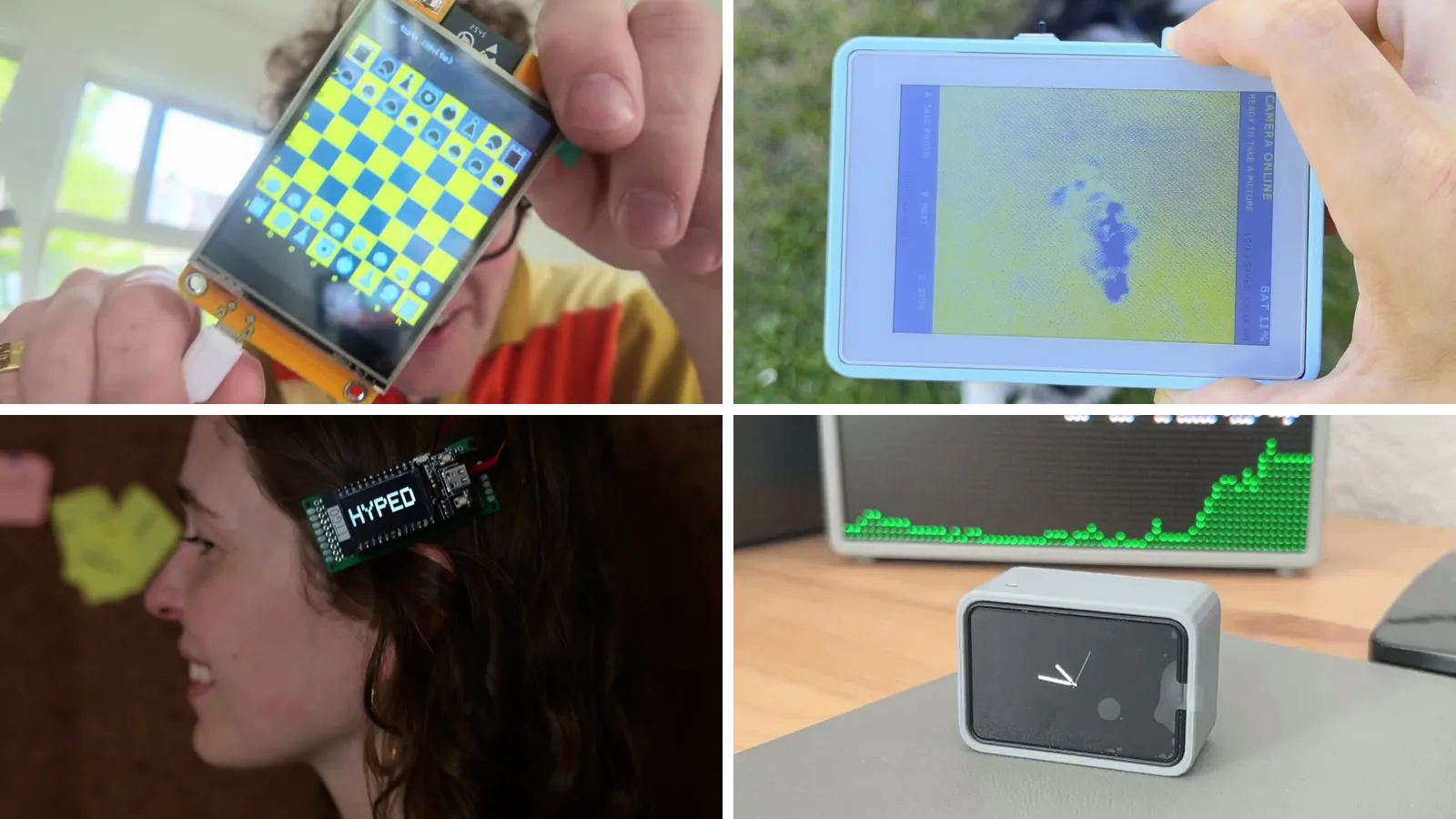
ESP32 display projects: touch screens, e-ink and tiny TFTs
A chess game on a Cheap Yellow Display, a camera that sends its photos to e-ink, a hair clip with a screen and a desk buddy with a face. Which ESP32 display board fits which build, and the projects to start from.
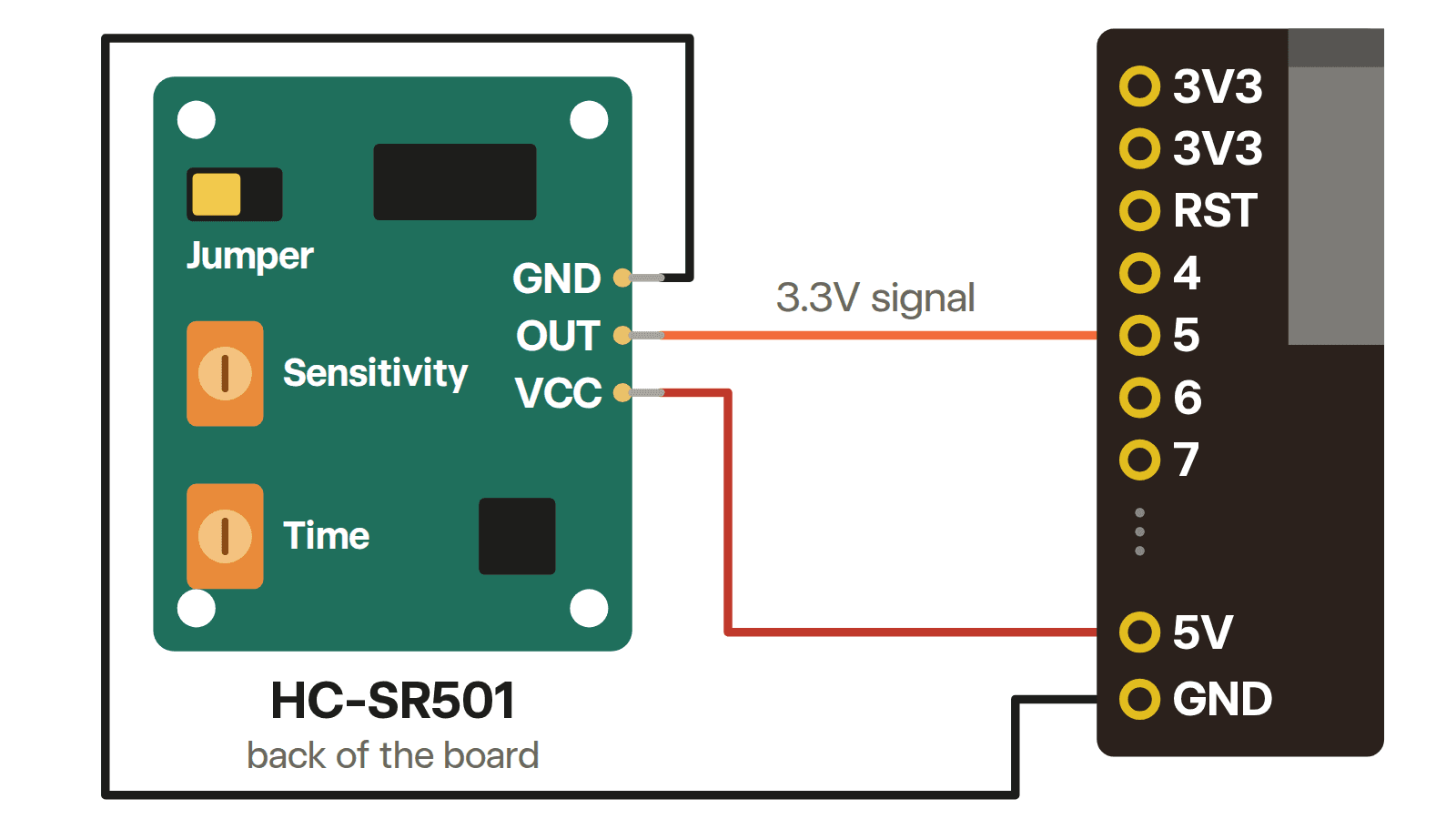
HC-SR501 PIR sensor: wiring, knob settings and the H/L jumper
The white dome sees body heat move. Two orange knobs and a tiny jumper decide how much it takes to trigger it and how long it stays on. Here is what each one does.
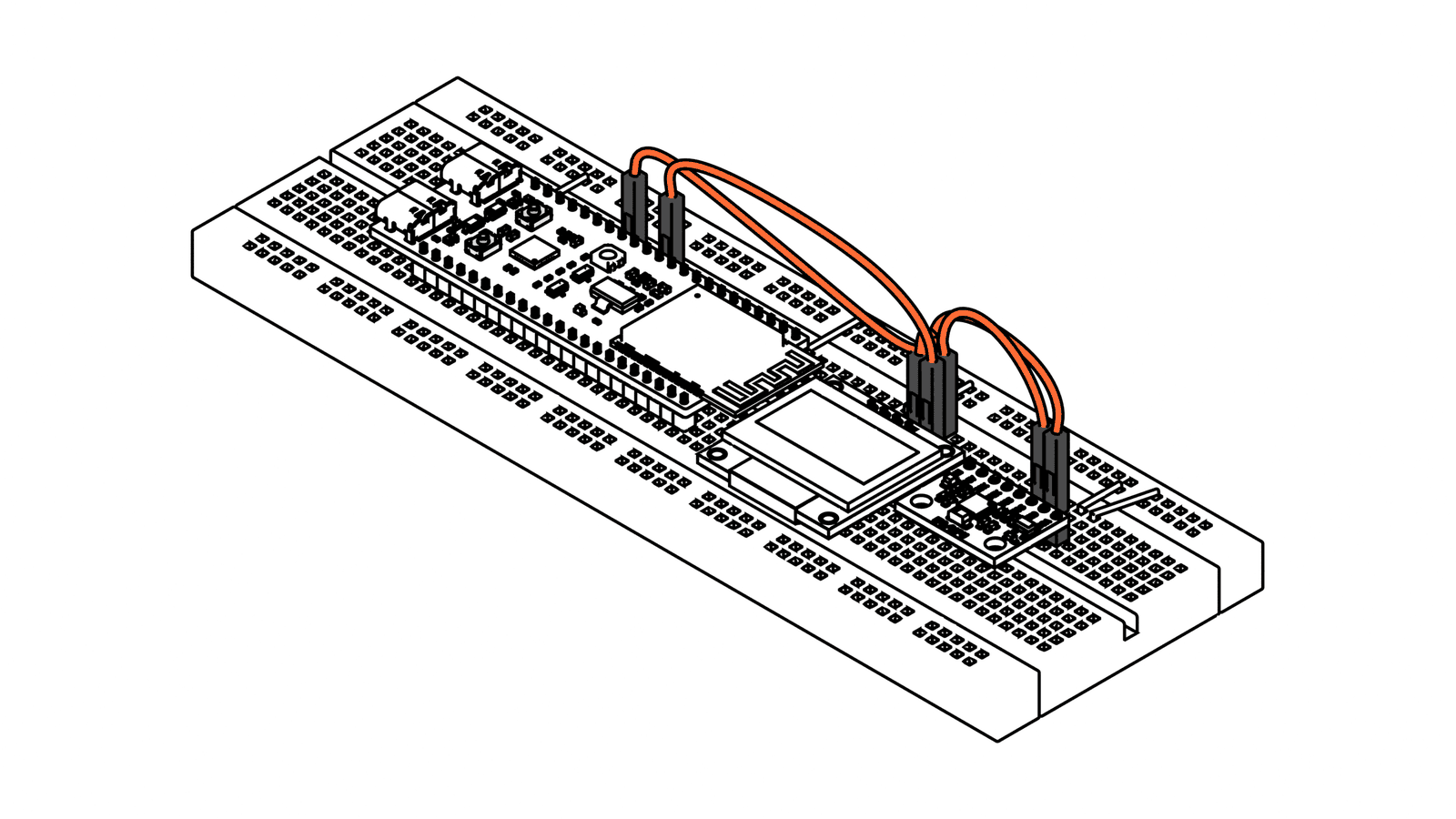
What is I2C? How it works, ESP32 wiring and I2C vs SPI
I2C lets a screen and a motion sensor share the same 2 wires on an ESP32-S3. Here is how the addresses work, what one message looks like and when SPI is the better pick.
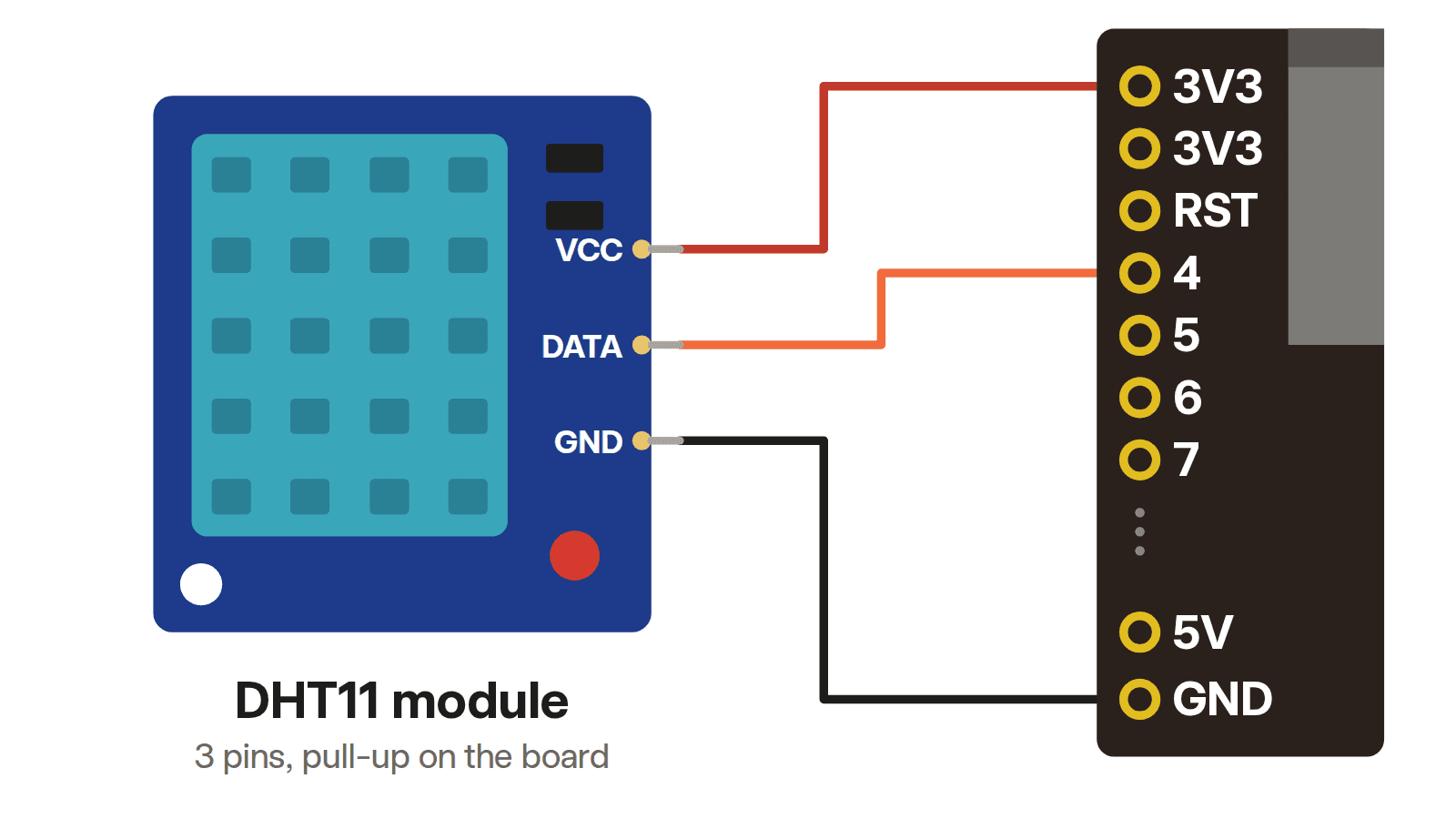
DHT11 pinout: the 3-pin module, the 4-pin sensor and why it reads NaN
The DHT11 comes as a bare sensor with 4 pins or on a small board with 3. Here is which pin is which, how to wire each one to an ESP32 and what to check when it prints NaN.
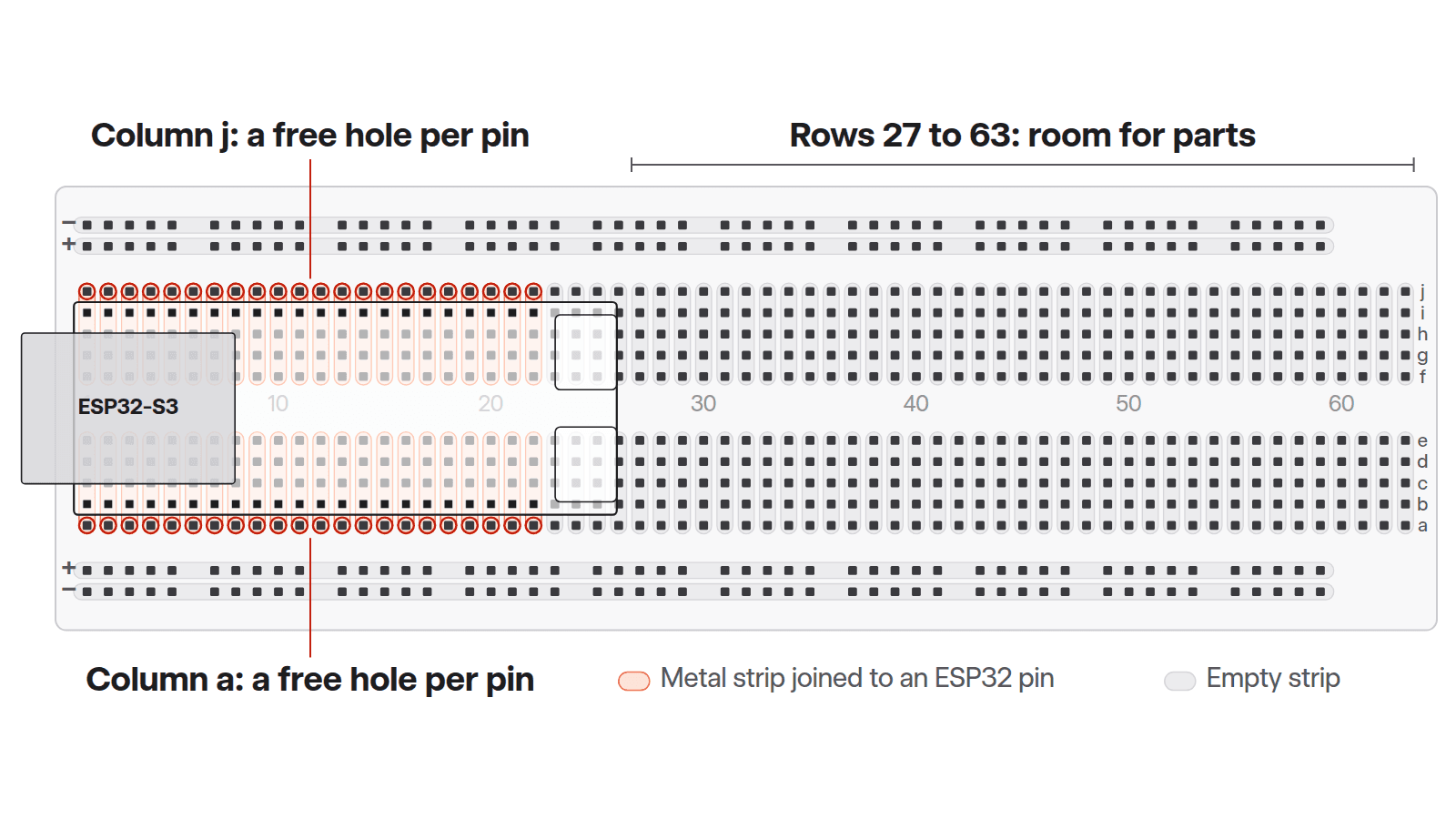
How to put an ESP32 on a breadboard and wire your first parts
Where the ESP32 goes on a breadboard, why it leaves you one free hole per pin and how to wire power, an LED and the first sensors of a room monitor.
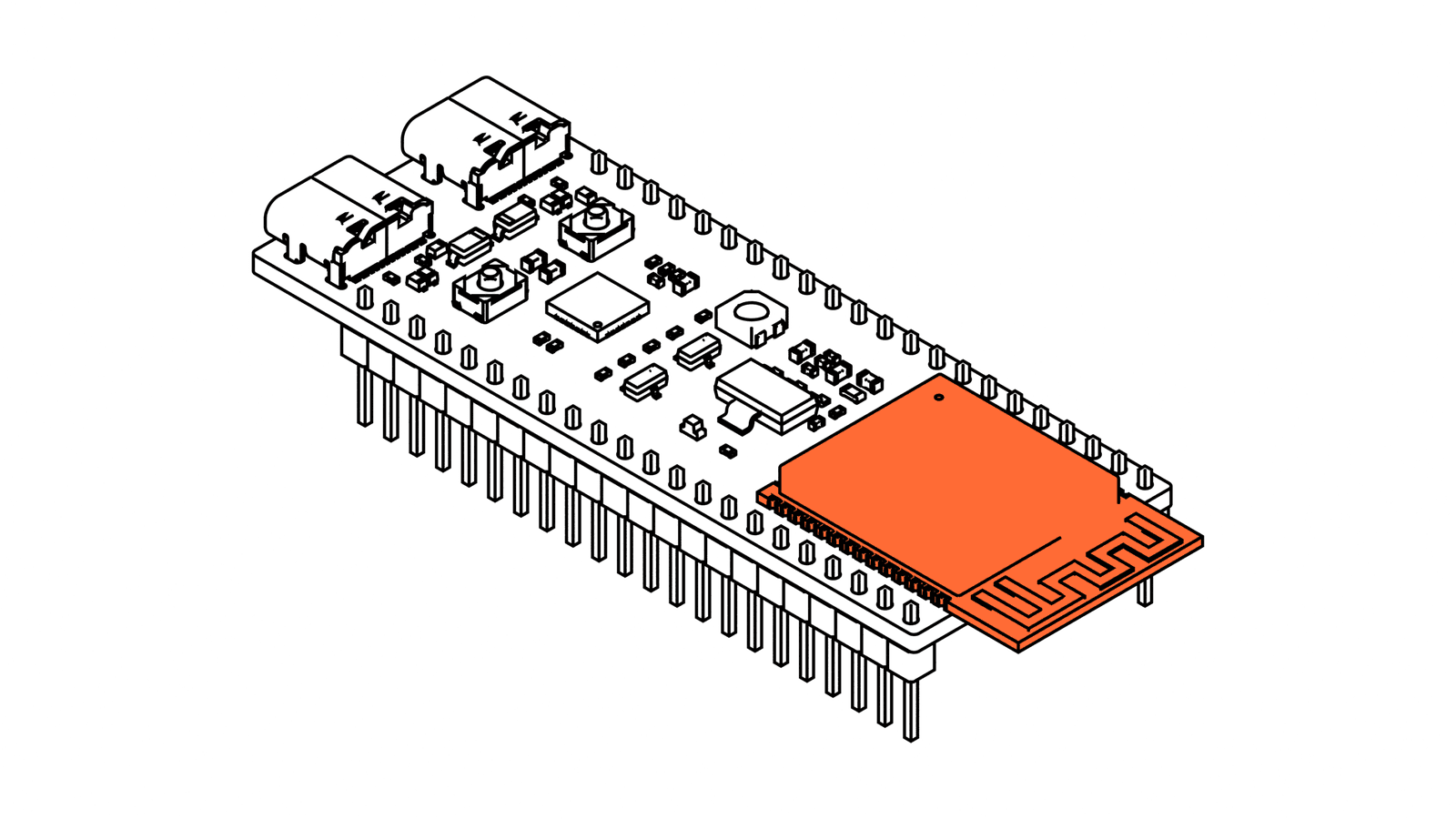
What is a microcontroller, and how is it different from a Raspberry Pi?
A microcontroller is a whole computer on one chip that starts its one program on its own when it gets power. Here is what's inside an ESP32-S3 and how it compares with a Raspberry Pi.
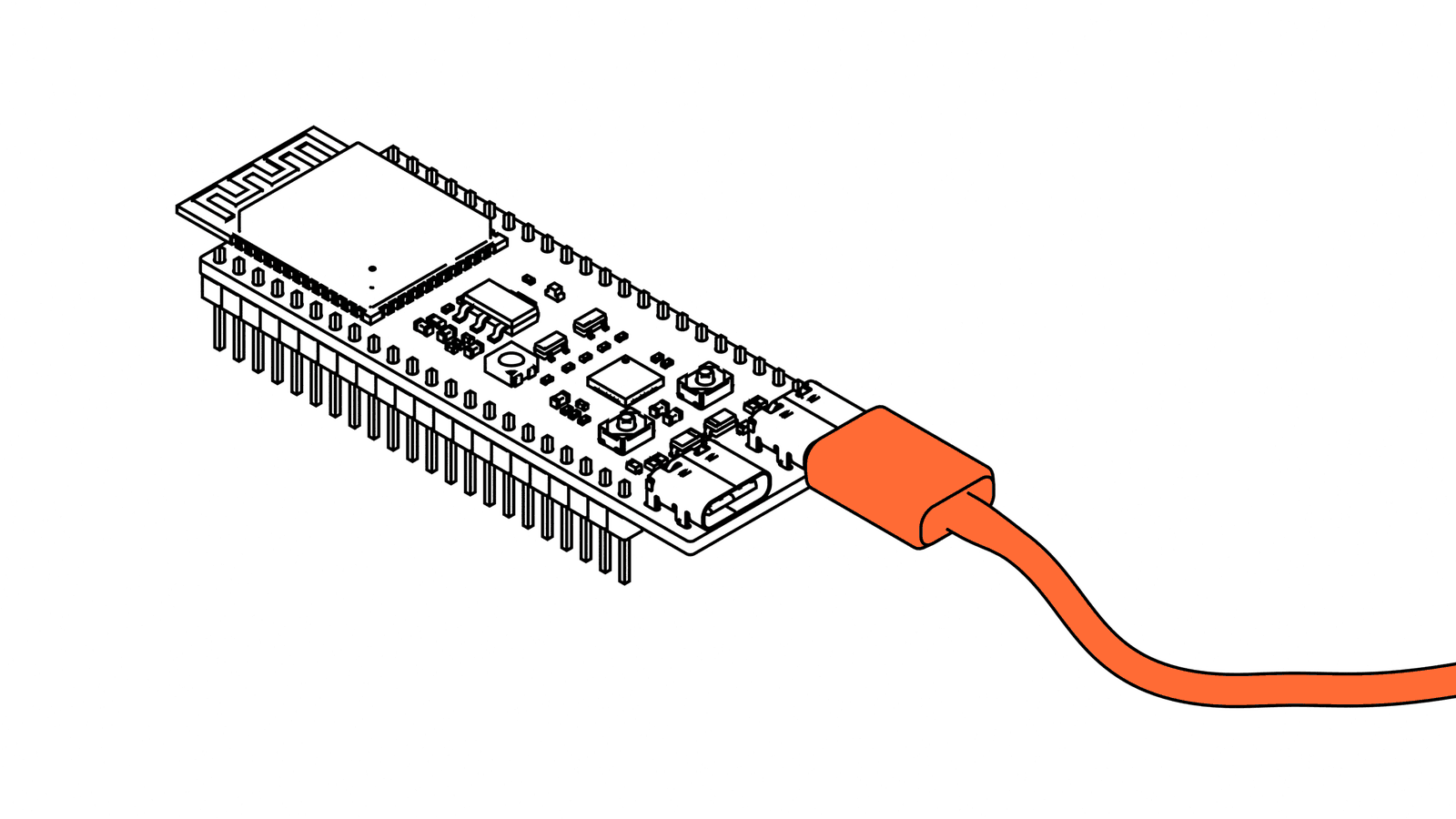
How to set up an ESP32 in the Arduino IDE, and fix a missing port
Plug in an ESP32, check your computer sees it, find its USB chip and driver, then flash your first sketch from the Arduino IDE, esptool or the browser.
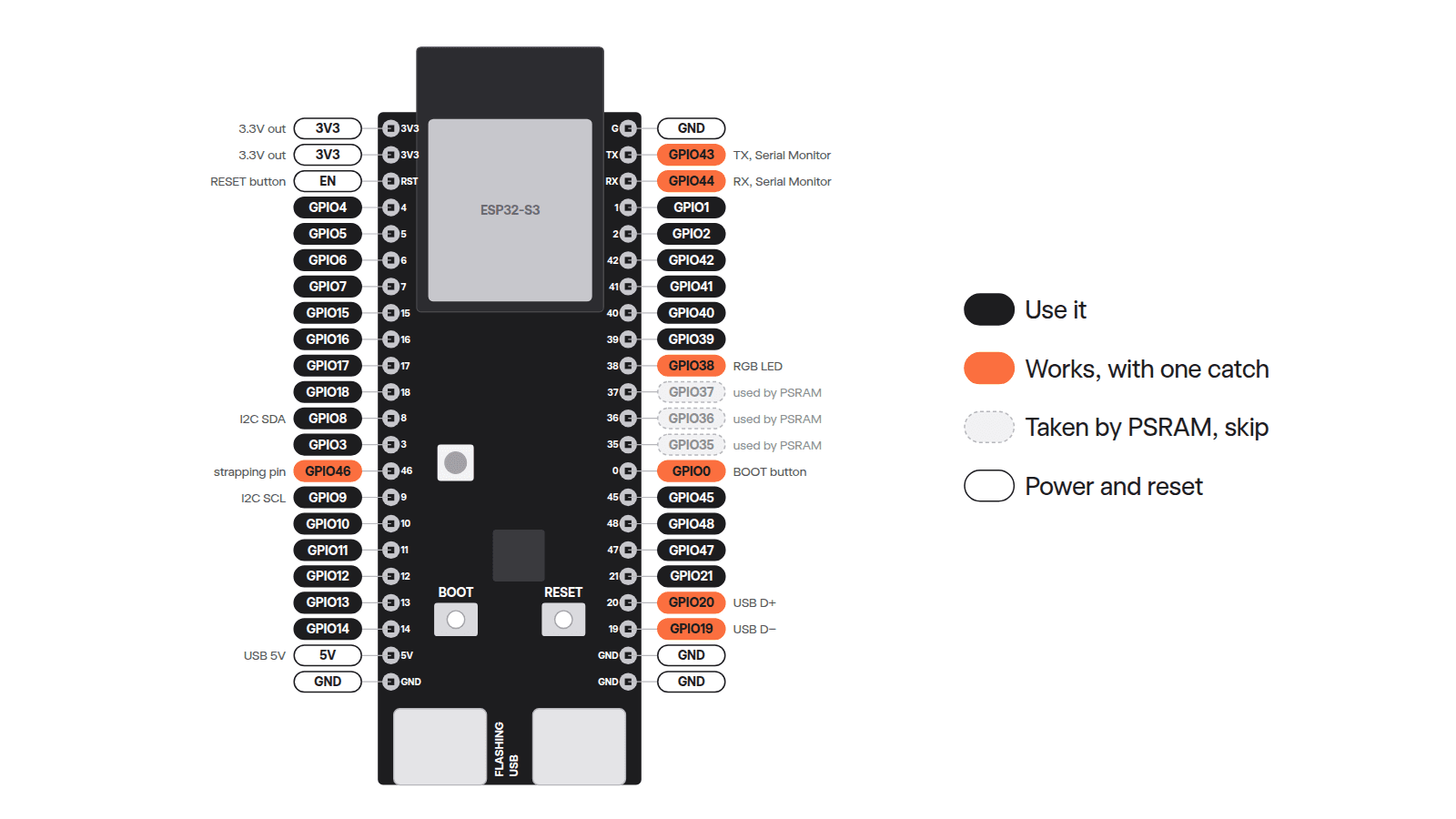
ESP32-S3-DevKitC-1 pinout: which pins to use first
Every pin on the ESP32-S3-DevKitC-1, sorted into pins you can use, pins with one catch and three pins to skip. Plus what the BOOT button does.
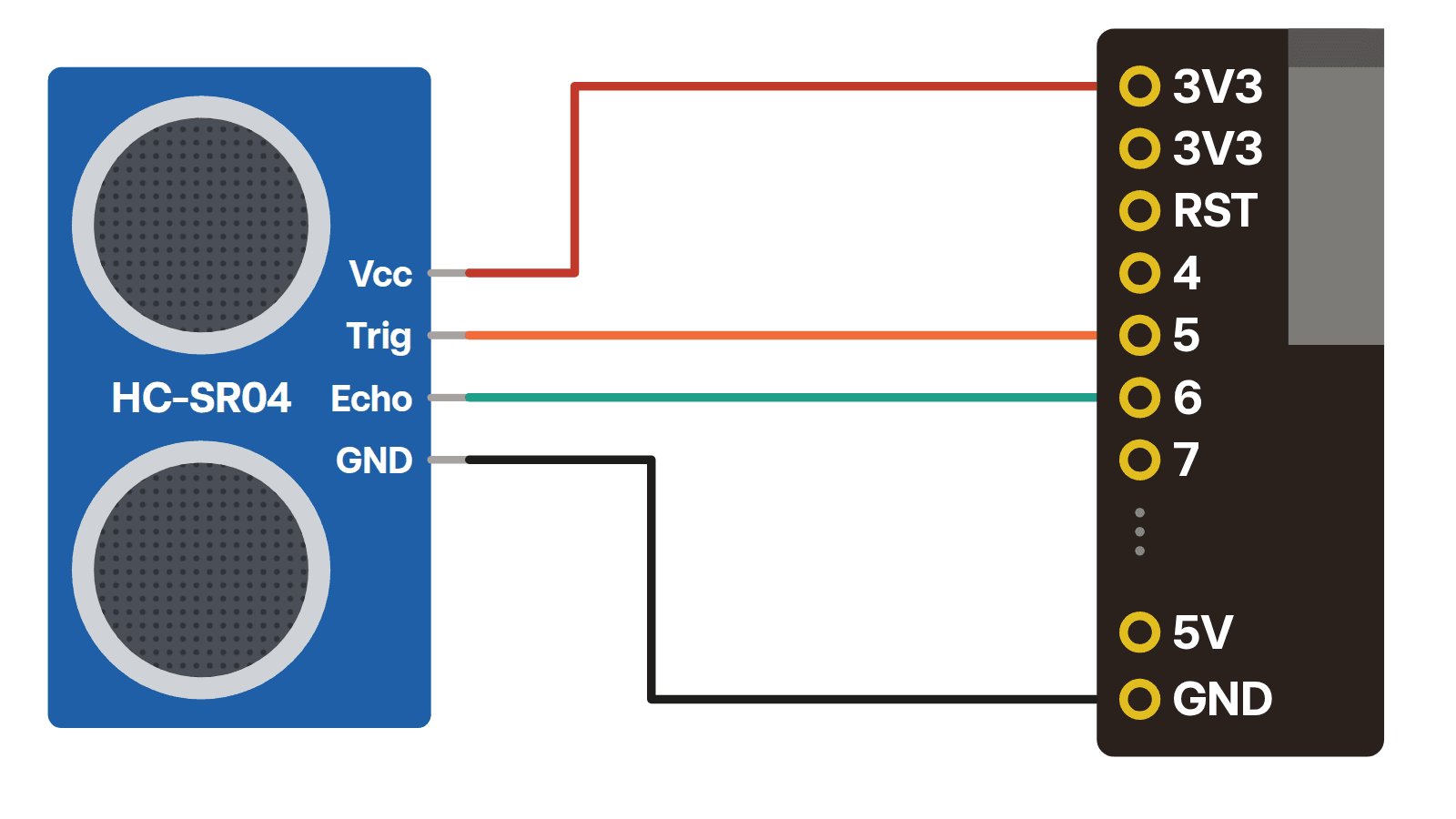
HC-SR04 vs VL53L0X: range, ESP32 wiring and the 5V Echo fix
One sensor listens for an echo like a bat. The other times a flash of invisible laser light. Here is how they compare, and how to wire each one to a 3.3V board.
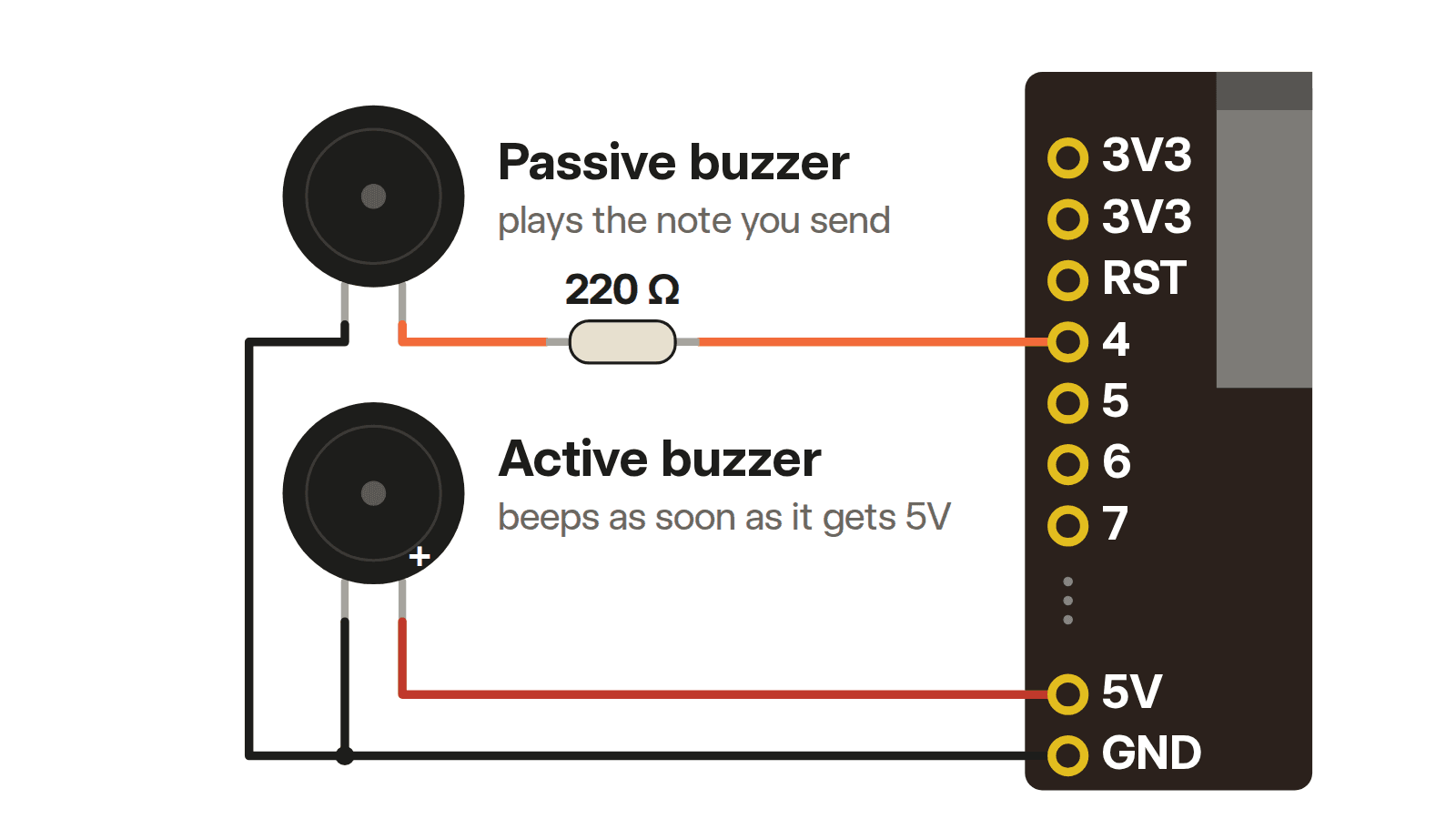
Active vs passive buzzer: how to tell them apart and wire each
Two buzzers that look like twins. Give one power and it beeps. The other stays silent until your ESP32 plays it a note.
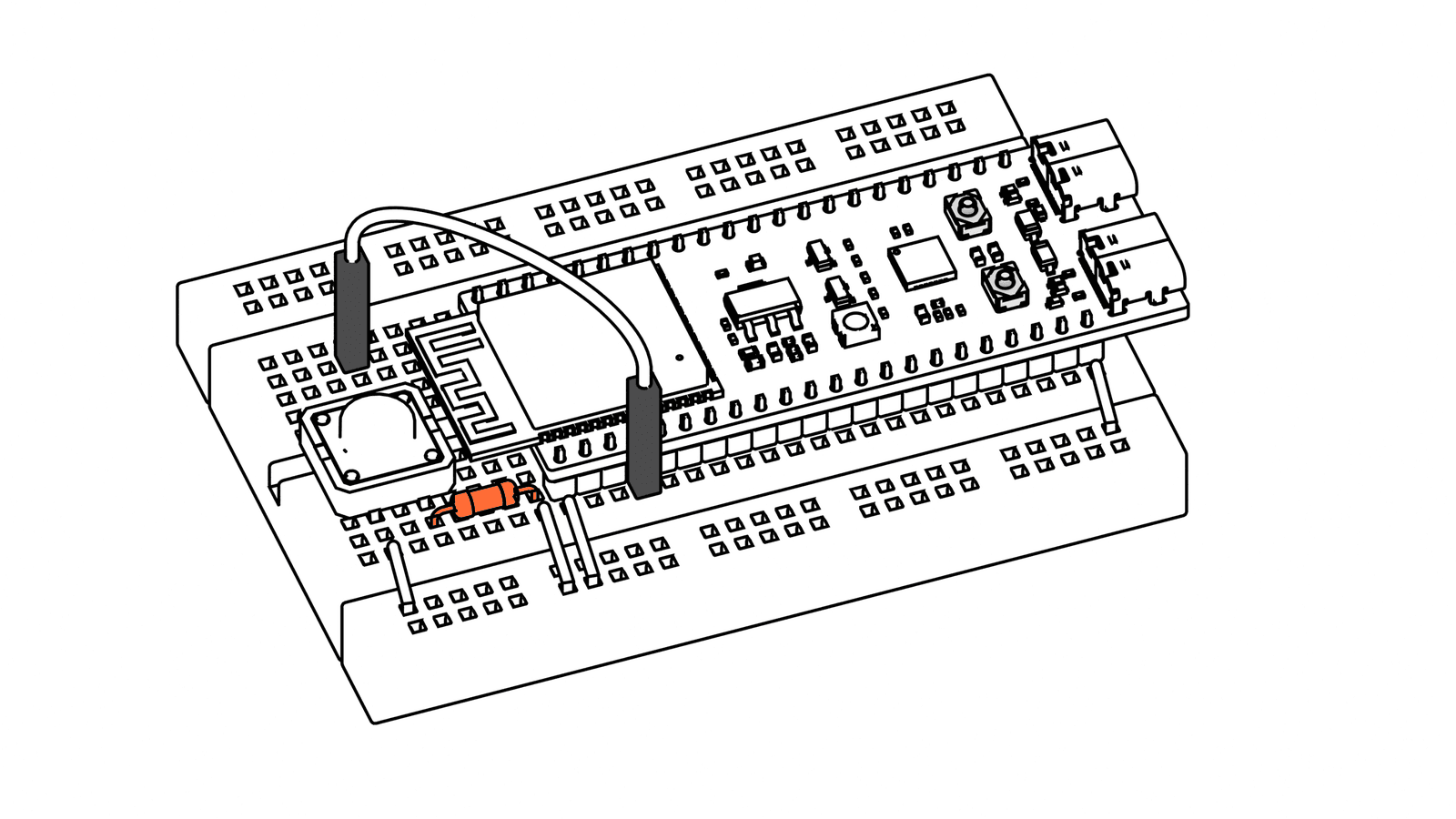
Pull-up and pull-down resistors: what they do and how to wire one
A button wired straight to a pin reads random presses. One 10kΩ resistor fixes it. Here is how pull-up and pull-down resistors work, and when the ESP32-S3's built-in ones are enough.
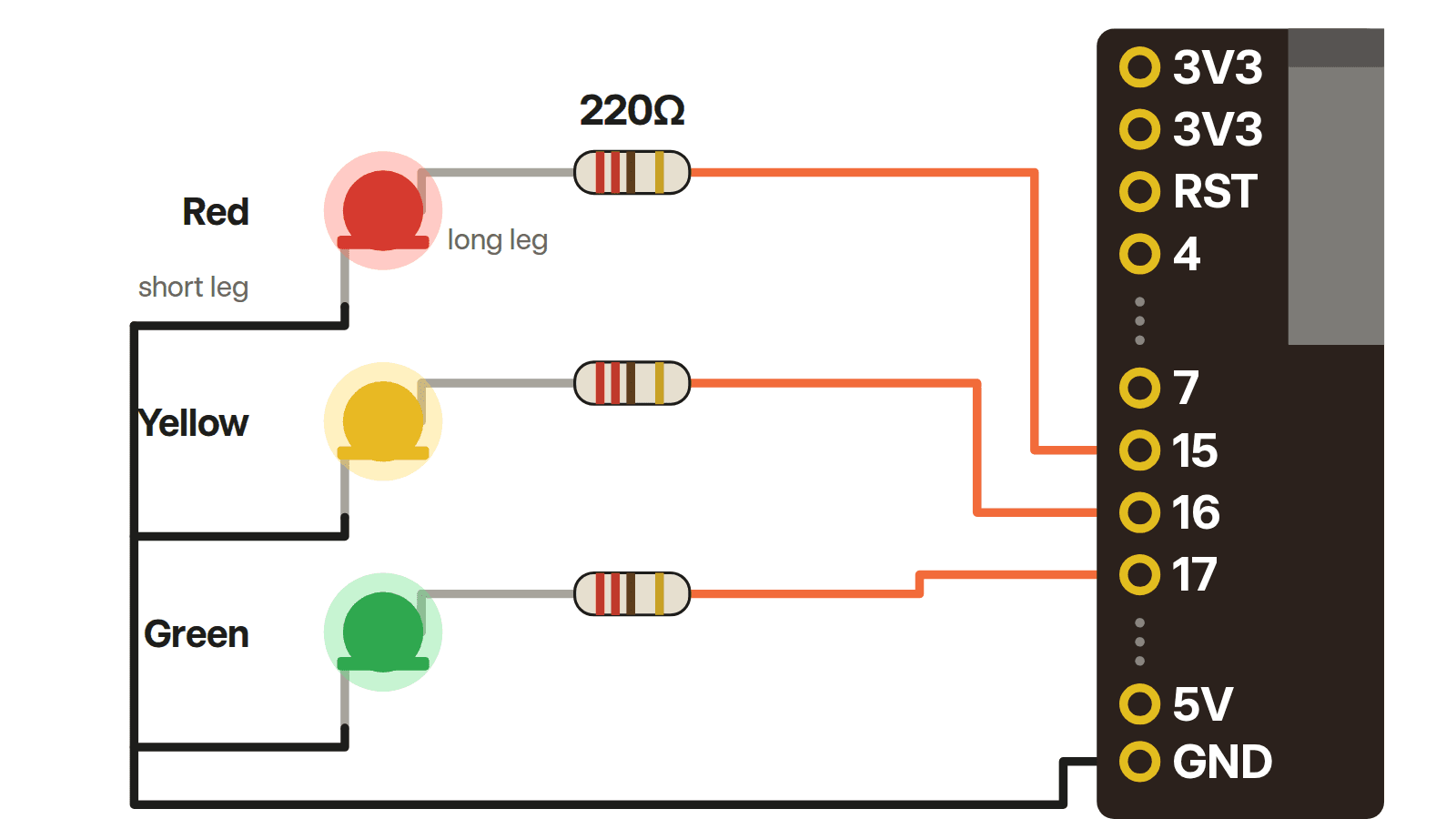
What resistor for an LED? Use 220Ω on 3.3V and 5V
A 220Ω resistor works for a red or yellow LED on a 3.3V ESP32 pin and for red, yellow and green on 5V. Here are the numbers behind it and what to do about green on 3.3V.
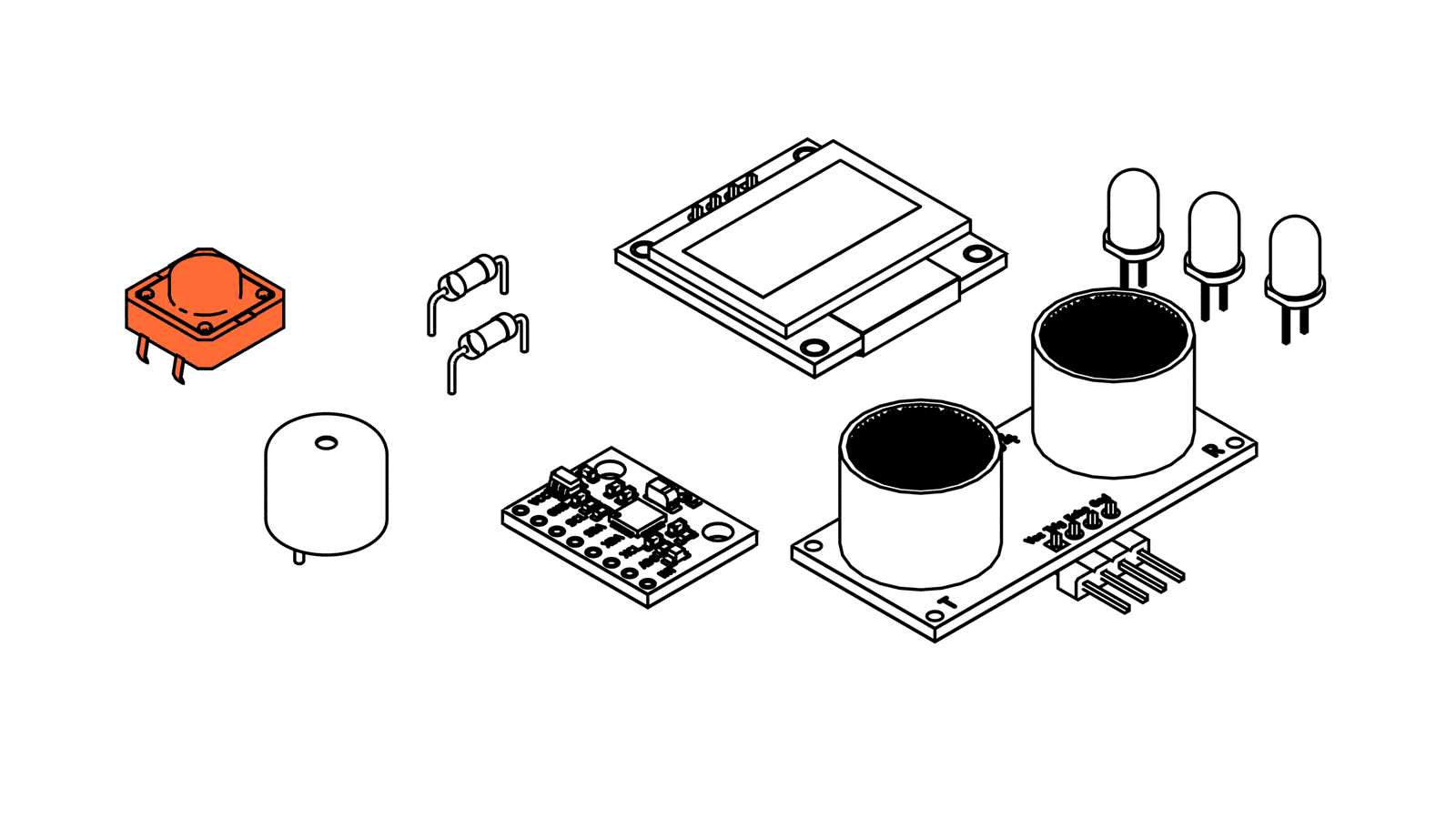
Most-used parts in Schematik projects
We counted the parts in all 902 published Schematik projects. A push button beat every screen and sensor, and one project in six adds no parts at all.
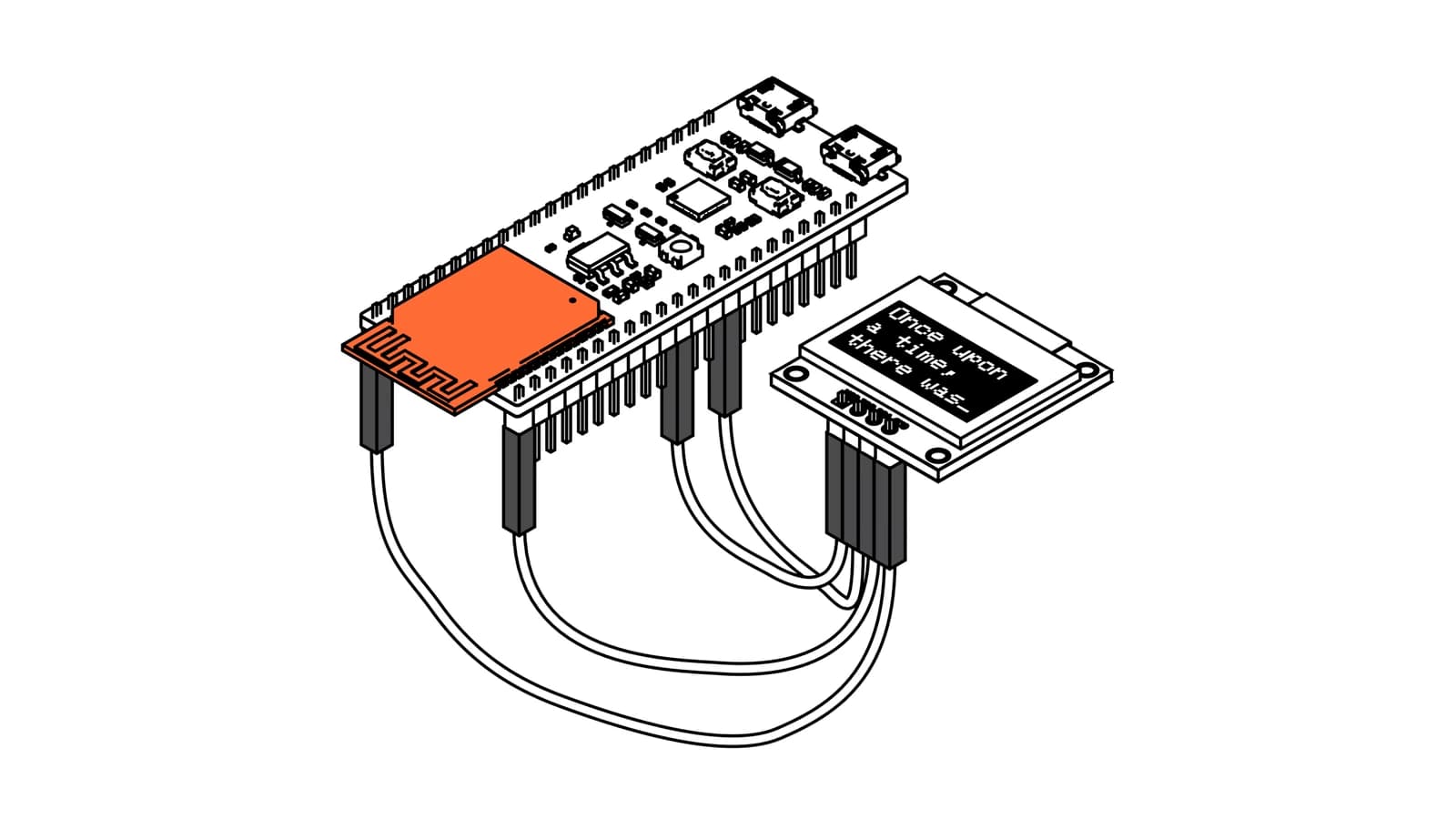
ESP32 AI projects for 2027: where does the brain live?
From a voice button that talks to your own computer to a language model that runs from flash memory, here is how 7 ESP32 AI projects split up the thinking.
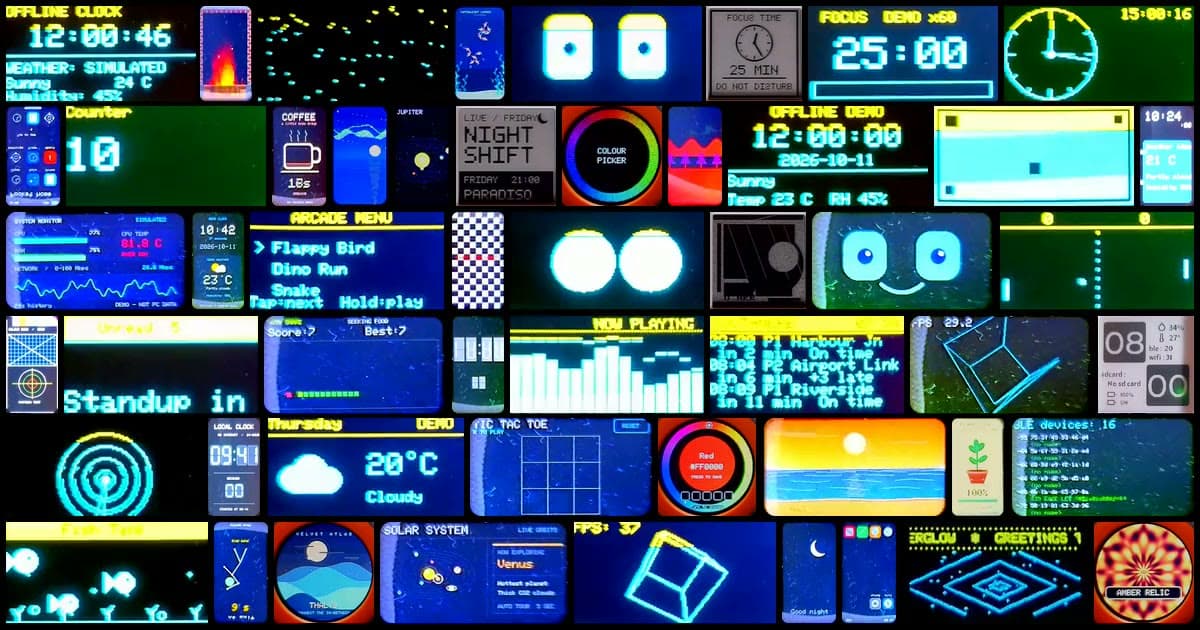
How we test new AI models on hardware
When changing AI models, we evaluate performance across many different criteria. Including whether real boards can be flashed with pretty patterns
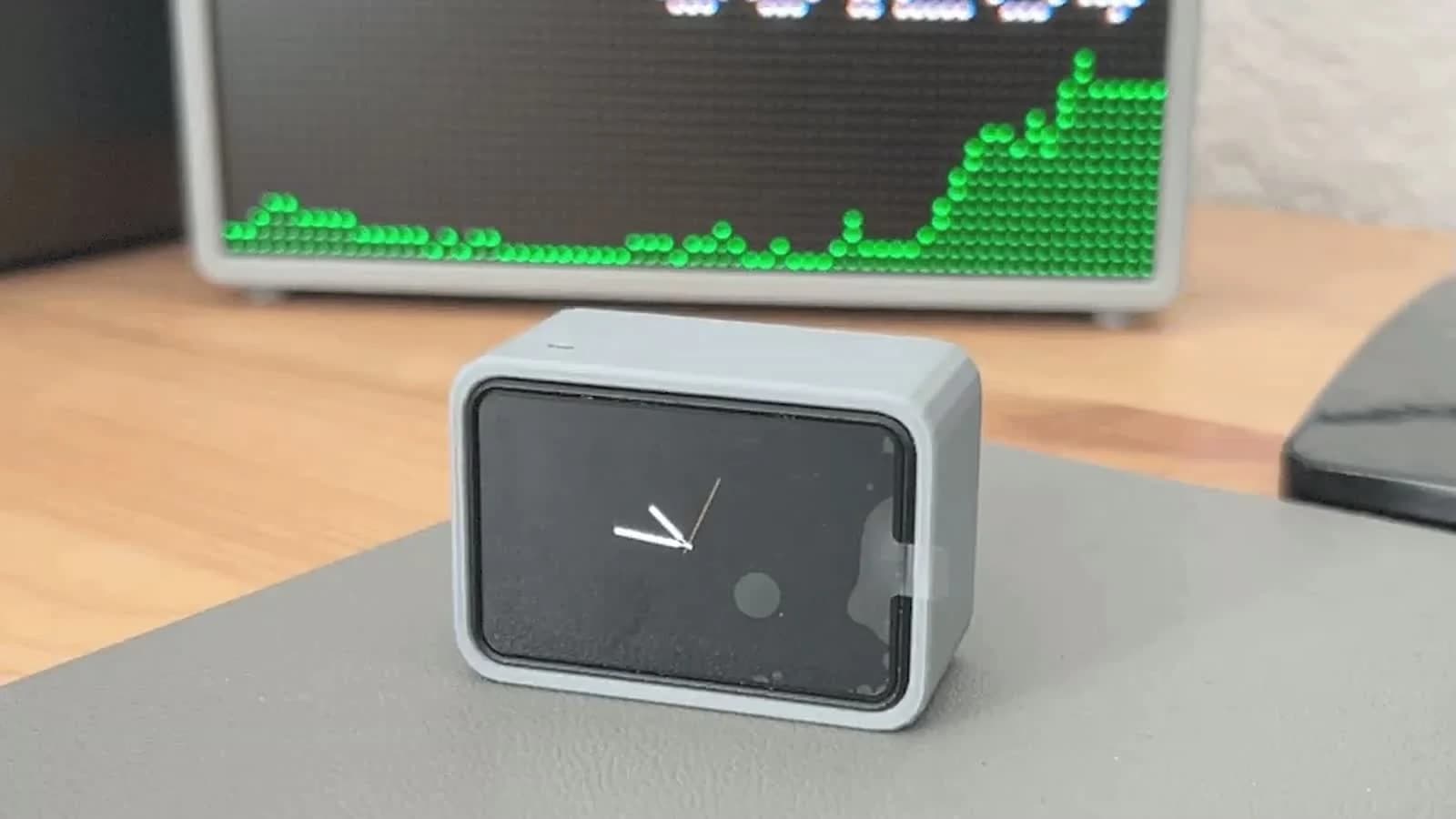
Desk buddies: tiny ESP32 faces that live next to your laptop
Why makers kept putting little faces next to their laptops in 2026, from a pet that asks before Claude runs a command to a busy light for your door.
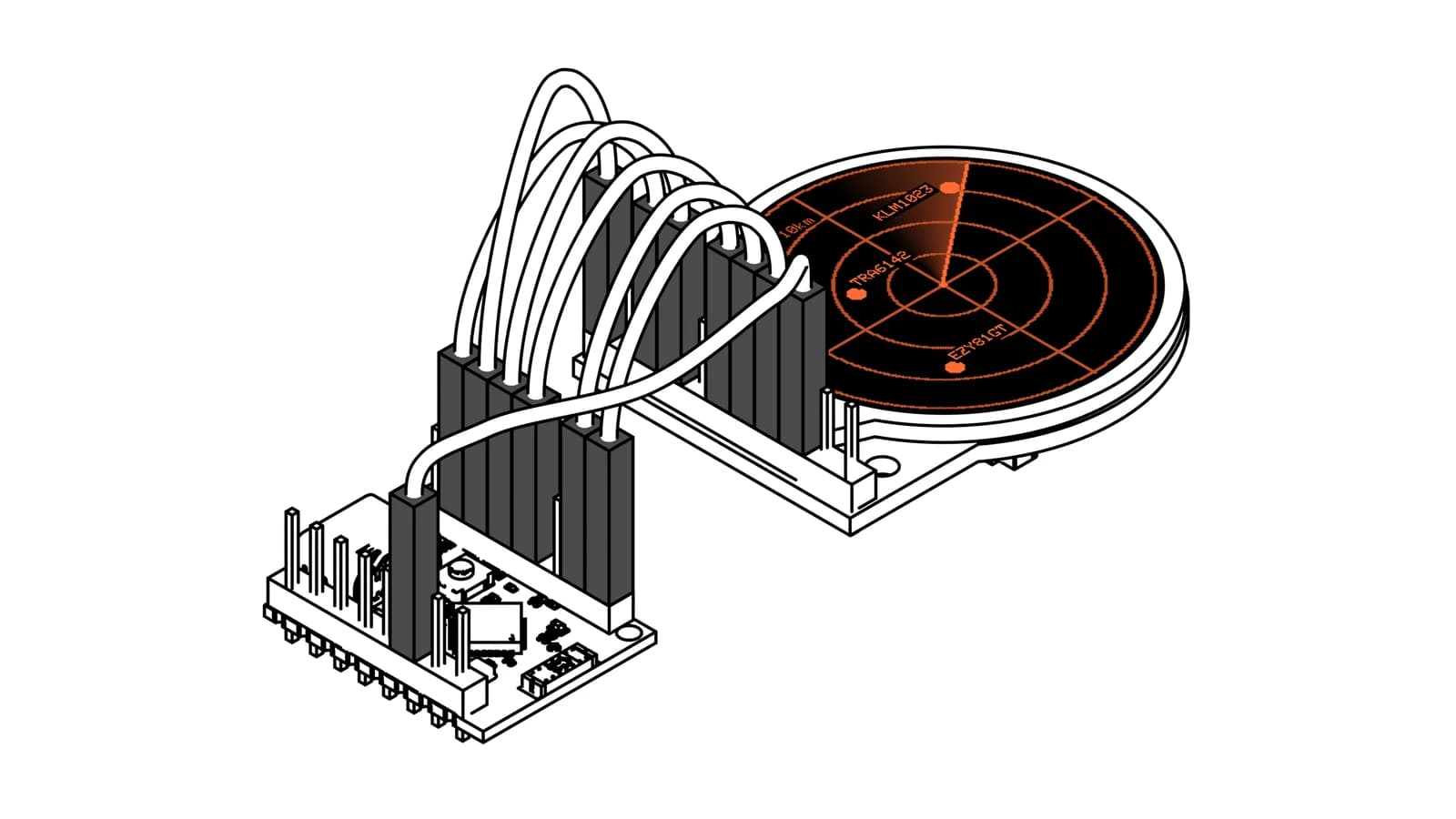
ESP32 projects to build in 2027: a plane radar, a desk buddy and 5 more
Seven small ESP32 builds from 2026, from a radar that spots the planes over your roof to a pixel lobster that sulks when you ignore it.

I Built a Gong That Controls the Internet
Max from n8n asked for the world's first webhook gong. Hit it, and it calls any URL on the internet, an n8n workflow, a Slack message, or every light in the house. Two parts, an ESP32 and a vibration sensor, and Schematik for the rest.

How to Make the Viral Digital Hair Clip
A LilyGo T-Display clipped into your hair, showing whatever you want it to say. Four parts, no breadboard, and the soldering is optional. The hard bit is not the electronics, it is getting it to stay on your head.

How to Build an E-Ink Camera
A XIAO ESP32S3 Sense in a 3D-printed shell takes a photo and pushes the JPEG over ESP-NOW to an M5Stack PaperColor, where it lands on the e-ink screen. No router, no SD card, no phone.
New to Hardware? A Beginner ESP32 Guide for Your First Build
A beginner ESP32 hardware guide: what to buy first, how breadboards work, what pin labels mean, and what to check before powering your first build.

I Built a Morning Printer That Prints My Day on a Receipt
For week four in the Schematik workshop, I wired an ESP32 to a CSN-A2 thermal printer so it fetches weather and calendar data and leaves a daily briefing on my desk.

I Built a Touchscreen Chess Game With Zero Hardware Skills
For week three in the Schematik workshop, I turned a viral idea for a distraction-free chess device into a working touchscreen chess game on an ESP32 Cheap Yellow Display.
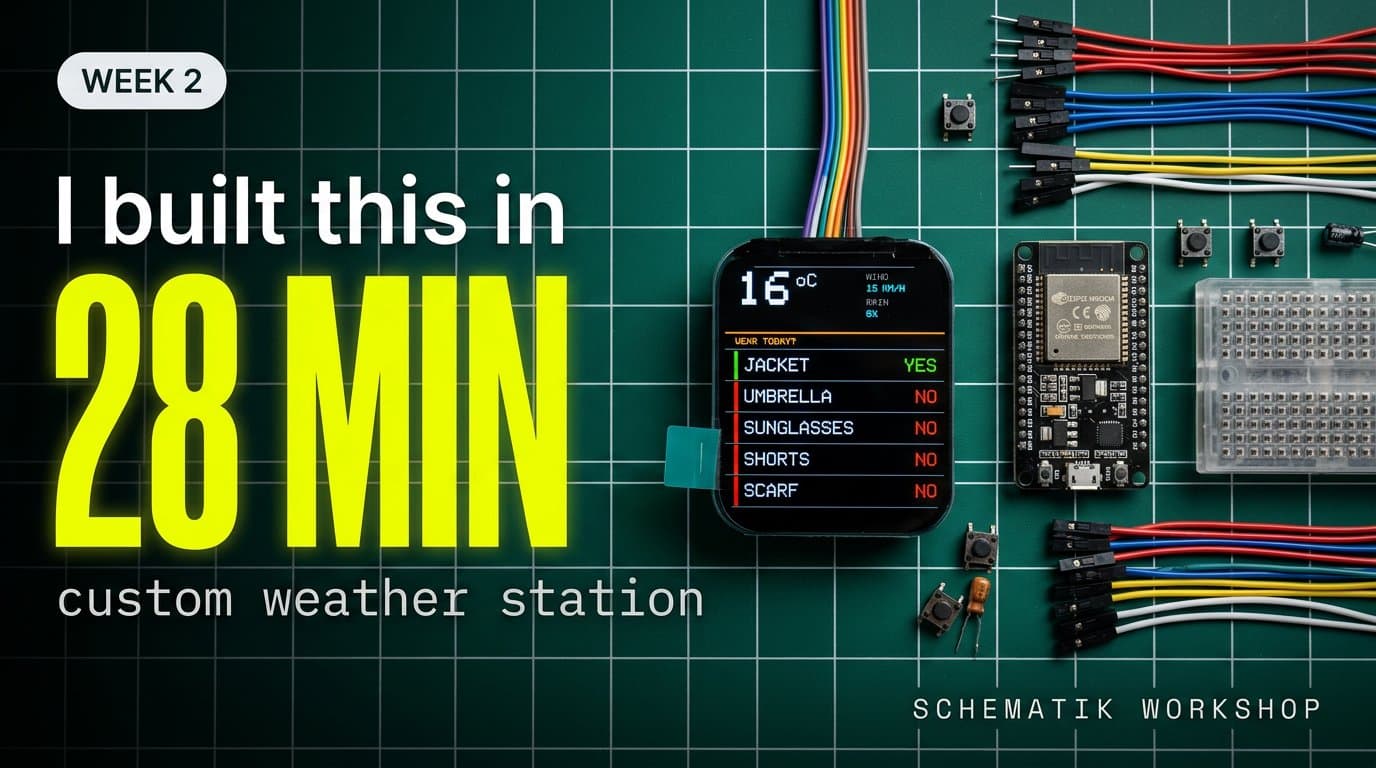
I Built an ESP32 Weather Station That Tells Me What to Wear
For week two in the Schematik workshop, I built a tiny ESP32 weather station that checks the forecast and tells me whether to take a jacket, umbrella, sunglasses, shorts, or scarf.
Schematik Raises $4.6M Pre-Seed to Help Anyone Build Hardware With AI
We raised $4.6M in a pre-seed round led by Lightspeed Venture Partners, with Puzzle Ventures and founders across robotics, AI, and electronics joining, making hardware as easy to build as software.